What Gets Lit
Pick the entry, one or two trees, and the strongest piece of architecture. Water features, stonework, and specimen planting come next. Add from there rather than starting everywhere.
What We Install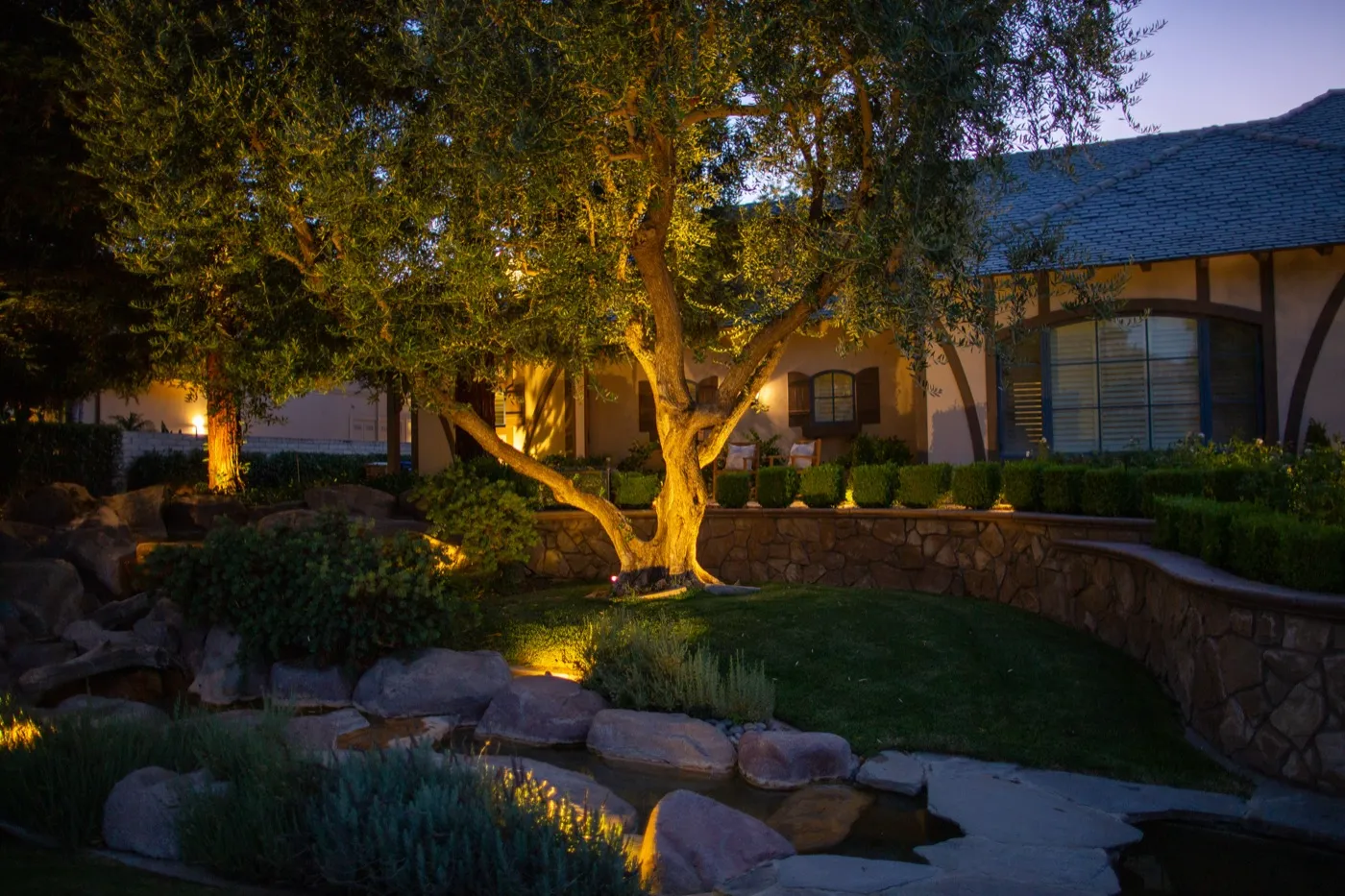
Outdoor lighting guide
What to light, what to leave dark, and the decisions that are yours to make.
Start here
Everyone starts by asking what to light. The more useful question is what to leave dark. Darkness is what gives a lit tree its shape and a lit doorway its pull. A property with light everywhere has no focus and reads flat, which is the same problem as having no lighting at all.
So the first pass through a property is about picking a small number of things worth seeing at night, in a rough order of importance, and accepting that everything else is background.
The six decisions
Fixture brand matters far less than these. Get them right and a modest system looks expensive.
Pick the entry, one or two trees, and the strongest piece of architecture. Water features, stonework, and specimen planting come next. Add from there rather than starting everywhere.
What We InstallAdjusted eyes need very little light. Contrast between lit and unlit does the work, not raw output.
Read Brightness Guidance2700K warm white suits most homes and matches interior spill. One temperature across the whole property.
Read Color Temperature GuidanceA narrow beam from further back lights a canopy fully. The same fixture close in makes a hot spot on bark.
Tree UplightingIf you can see the lamp from a chair, a window, or the sidewalk, the fixture is wrong or needs a shield.
Common MistakesSplitting the system lets the front run every night and the backyard run only when you are out there.
How It Works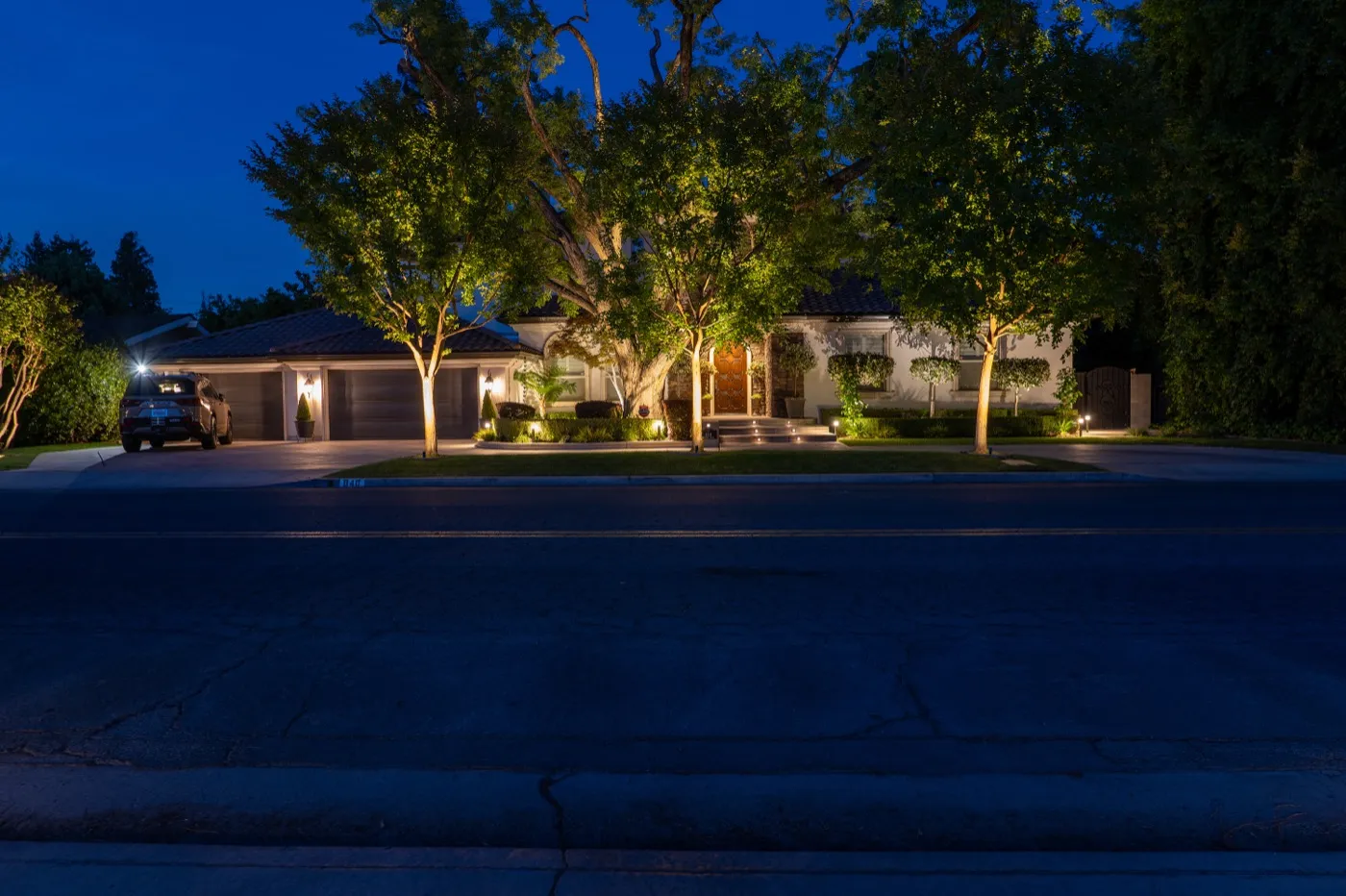
Brightness and color
Brightness is judged against surroundings, not in absolute terms. On a dark street a modest uplight reads beautifully; the same fixture next to a bright security floodlight disappears. Which is why the first thing we often recommend is turning something off rather than adding something new.
Color temperature is the other one. Warm white flatters natural materials and matches the light coming out of the windows. A single cool-white fixture in a warm scheme stands out immediately, so consistency matters more than the exact number.
Common mistakes
Fixtures on a grid read as hardware and usually leave the actual hazards unlit. Place them at turns, edges, and level changes.
A single bright source flattens the elevation and washes out every other fixture on the property.
Close placement burns the bark and leaves the canopy dark, and the fixture becomes unserviceable as the tree grows.
A transformer at full capacity has no room to add a zone later and pushes voltage drop at the end of long runs.
Connections that cannot be reached are the single most common cause of a zone going dark years later.
Aim can only be judged once the system is the only light on the property. Daylight aiming is guesswork.
Phasing
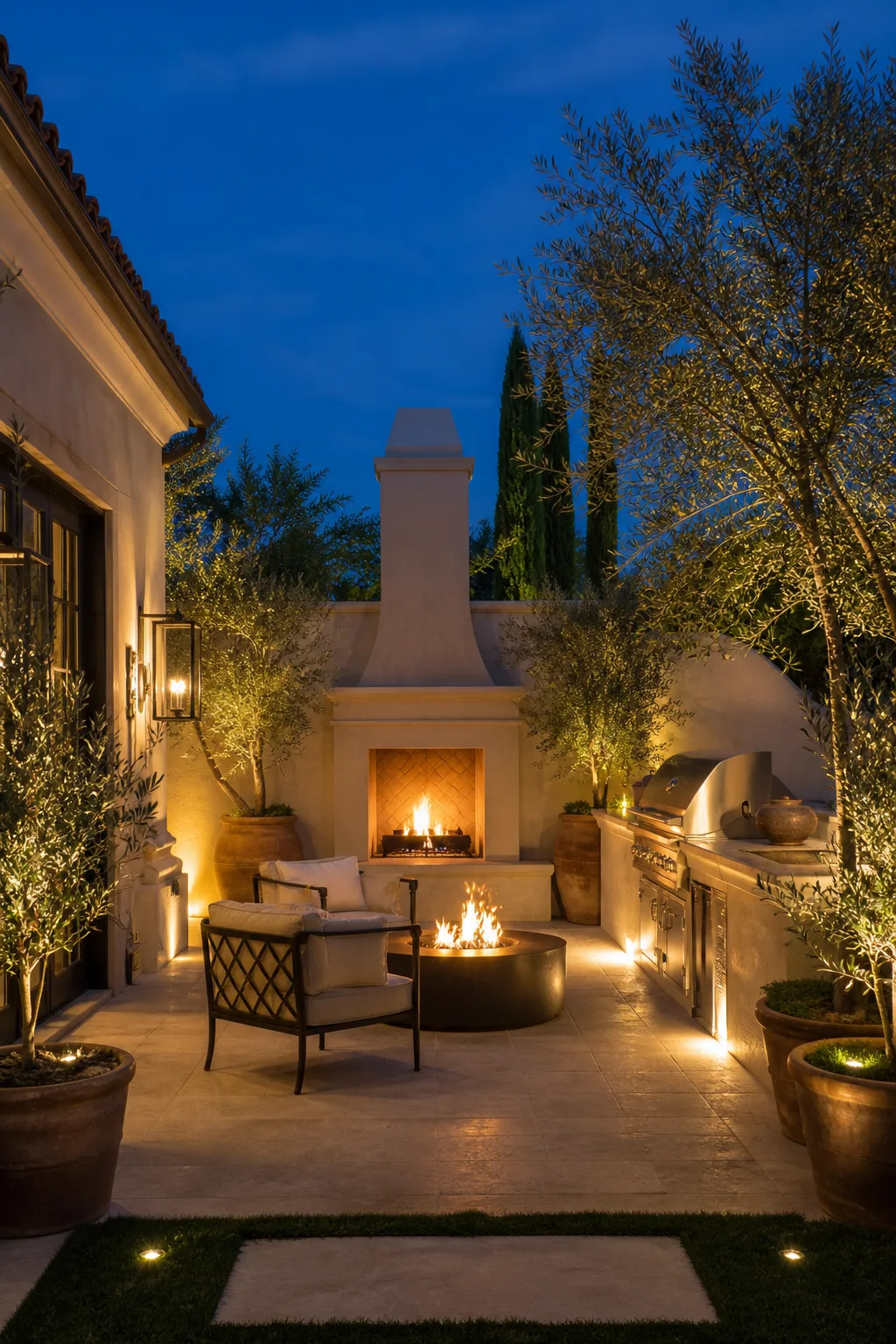
Most properties are better off starting with the front: the elevation, the walk to the door, and the two or three trees that carry the view from the street. That is the part you and every visitor see every night.
If the transformer is sized with headroom and main runs are stubbed toward future areas on the first install, adding the backyard later is straightforward rather than a second full project.
Questions
These answers are on the page and reflected in the page’s structured data.
Dimmer than most people expect. Once your eyes adjust to the dark, a small amount of light reads clearly. The goal is contrast between lit and unlit areas, not overall brightness, so a system that looks subtle in isolation usually looks correct in context.
Warm white in the 2700K range is the usual choice for residential landscape lighting. It flatters stone, stucco, and bark, and matches the interior light spilling out of the house. 3000K reads slightly crisper on modern architecture. Mixing temperatures across one property is the most common visible mistake.
No. Lighting three trees well looks better than lighting ten evenly. Choose the specimens that carry the view from the street and from the windows you look out of most, and leave the rest dark to create depth.
It depends on frontage, planting, and how much architecture there is to light. A modest front elevation with a walkway and two trees is a different project from a wide lot with stonework and mature specimens. Fixture count comes out of the walk-through rather than a formula.
Yes, if the timing works. Running wire before hardscape and planting go in avoids trenching through finished surfaces and lets fixtures be placed exactly where the design wants them.
They should not. Shielded fixtures, beams kept below the roofline, and aiming away from property lines keep light on your property. Glare guards handle the rest.
Next steps