Fixture Count
The single biggest factor. A front-yard refresh and a whole-property system are different projects.
See the Parts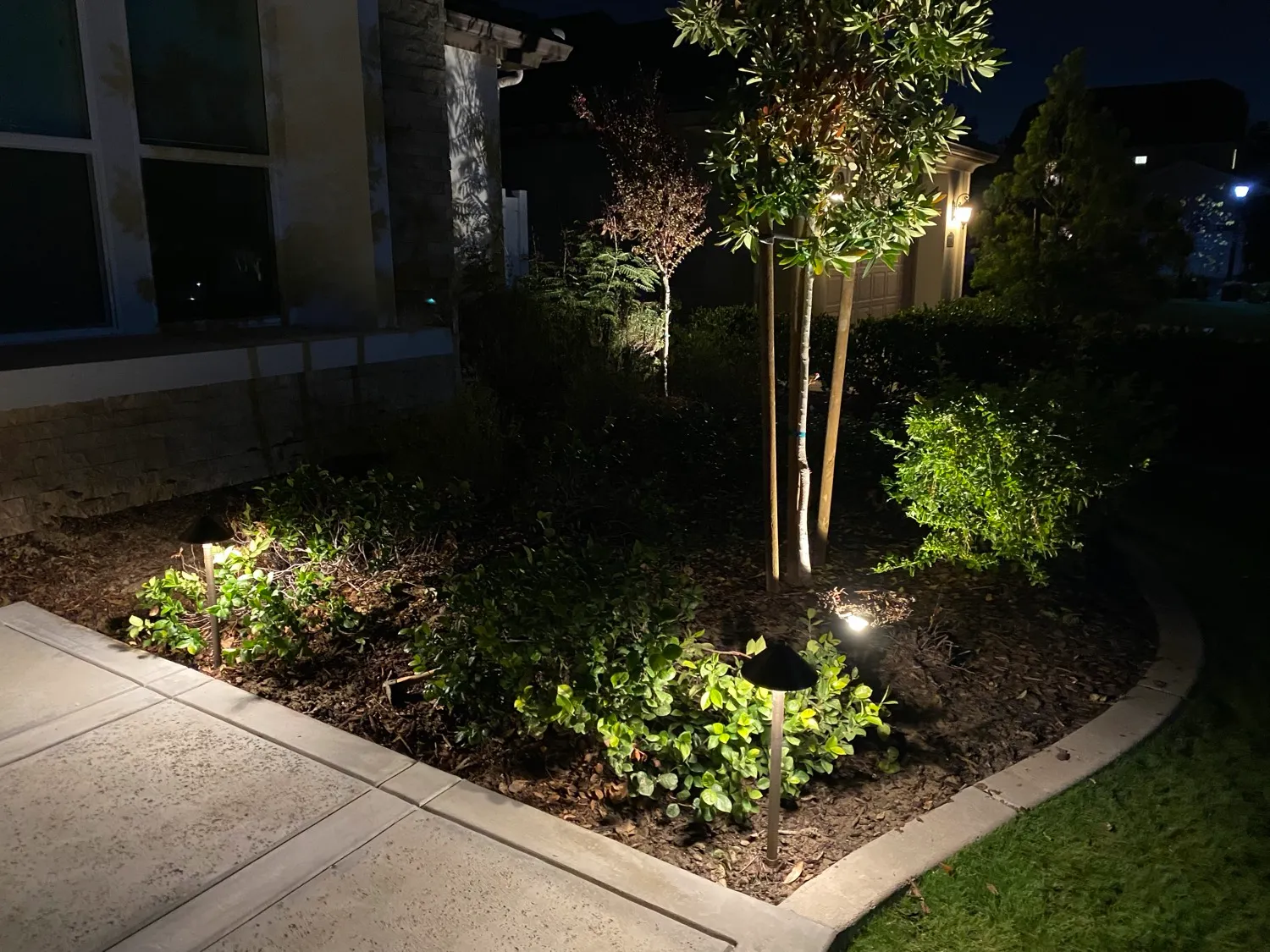
Pricing guide
An honest look at the variables that move a landscape lighting quote up or down.
Overview
Two houses the same size can differ by a wide margin, because cost follows fixture count, trenching distance, and how hard it is to get wire from the transformer to the far corner of the property.
Rather than publish a number that will not match your property, this page explains what we are actually pricing so the estimate makes sense when you read it.
Cost drivers
Every quote is a combination of these. Fixture count and access are usually the two biggest.
The single biggest factor. A front-yard refresh and a whole-property system are different projects.
See the PartsCast brass and copper cost more than aluminum or composite and last far longer outdoors.
Why It MattersWire from the transformer to the back corner of a large lot adds labor and heavier gauge cable.
See Trenching Cost DetailsCrossing existing concrete, pavers, or a pool deck requires boring or careful routing.
See Hardscape Access DetailsLarger loads and more independent zones mean more capacity and more terminal work.
How It WorksA basic astronomical timer costs less than zoned app control and dimming.
How It Works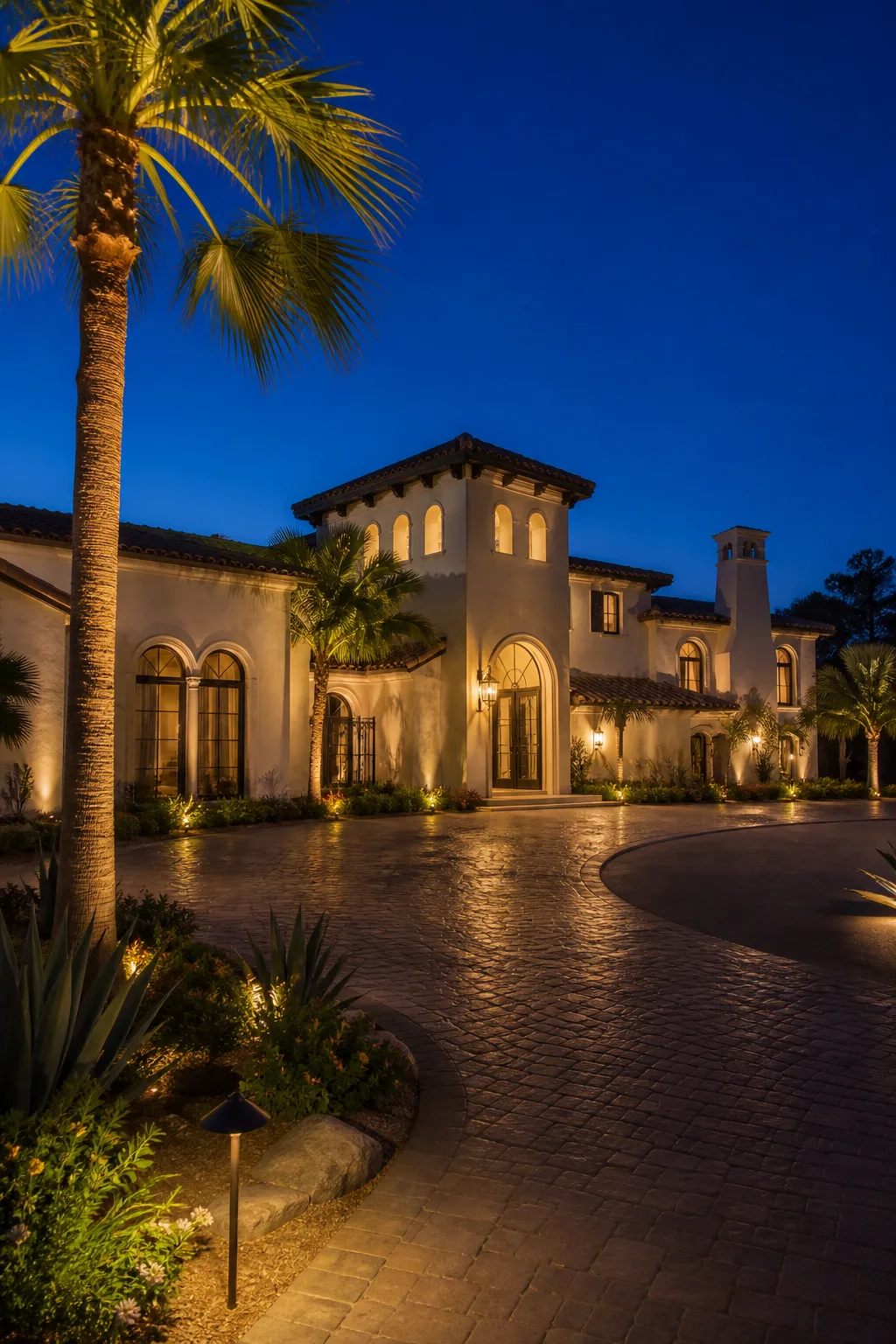
Where money is worth spending
Wire gauge, transformer capacity, and connection quality are buried on install day. Getting them right costs a little more up front and saves a rebuild in five years.
Fixture count, on the other hand, can be phased. Many properties start with the front elevation and the walk to the door, then add the backyard once the transformer and main runs are already in the ground.
In detail
Fixtures are counted per zone: entry, walkways, trees, beds, architecture, backyard.
Total wattage sets transformer size; run length sets wire gauge.
Trenching, boring under hardscape, and working around irrigation are quoted as labor.
Timer, photocell, or app control and any dimming are priced per zone.
You get a written scope by area so you can add or cut a zone and see the effect.
Questions
These answers are on the page and reflected in the page’s structured data.
Yes, and it is often the smartest approach. If the transformer is sized with headroom and main runs are stubbed toward future areas, adding a zone later is straightforward.
Sometimes. We will look at what you have. If the fixtures are serviceable and outdoor-rated we can often work with them, but we will be honest if they are not worth installing.
Yes. Modern low-voltage LED fixtures draw a fraction of the power of halogen, which means smaller transformers, longer runs, and far fewer lamp changes.
The initial property walk and proposal are part of the quoting process. Complex properties that need staged drawings are discussed up front.