Pick the specimens
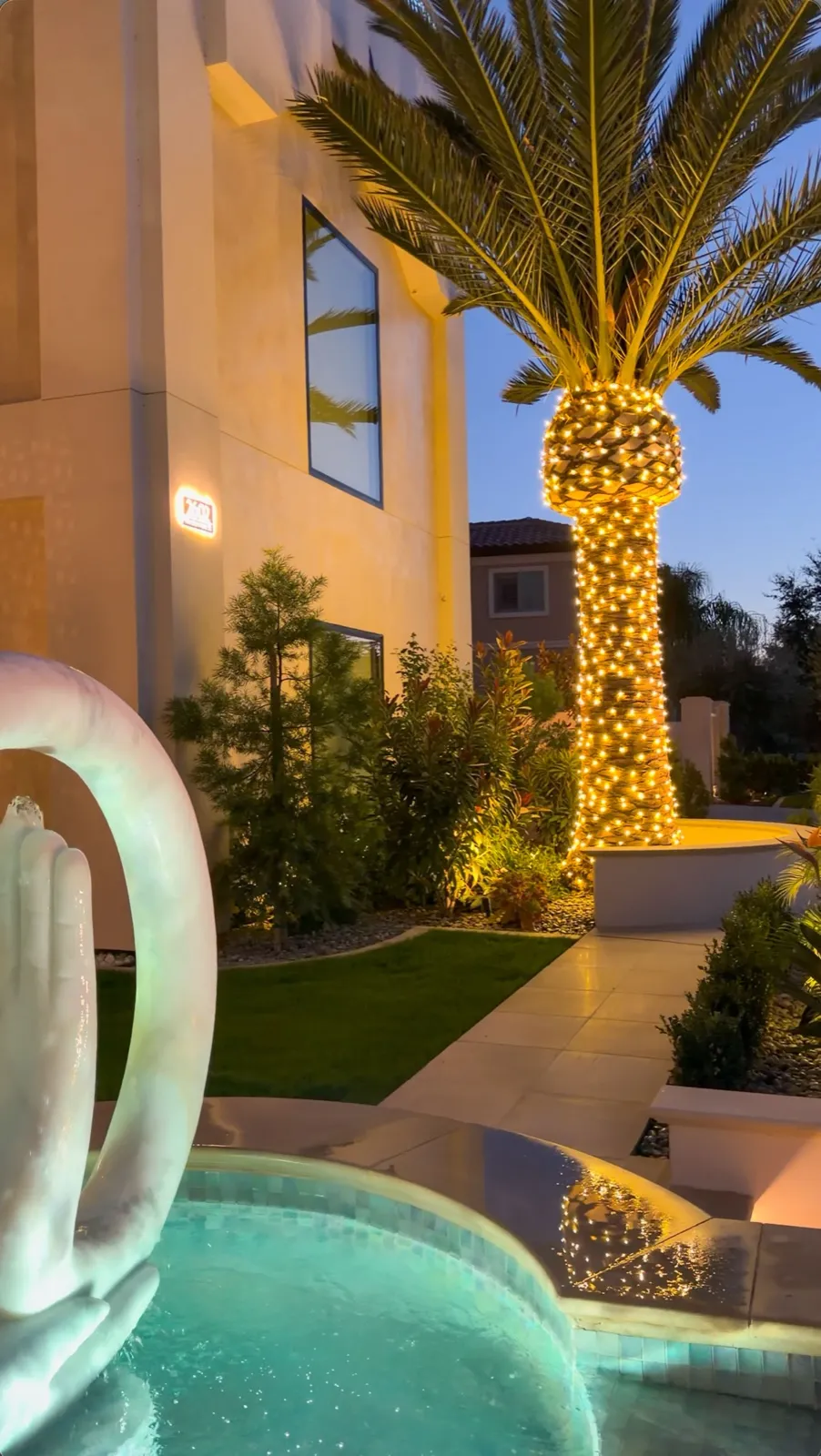
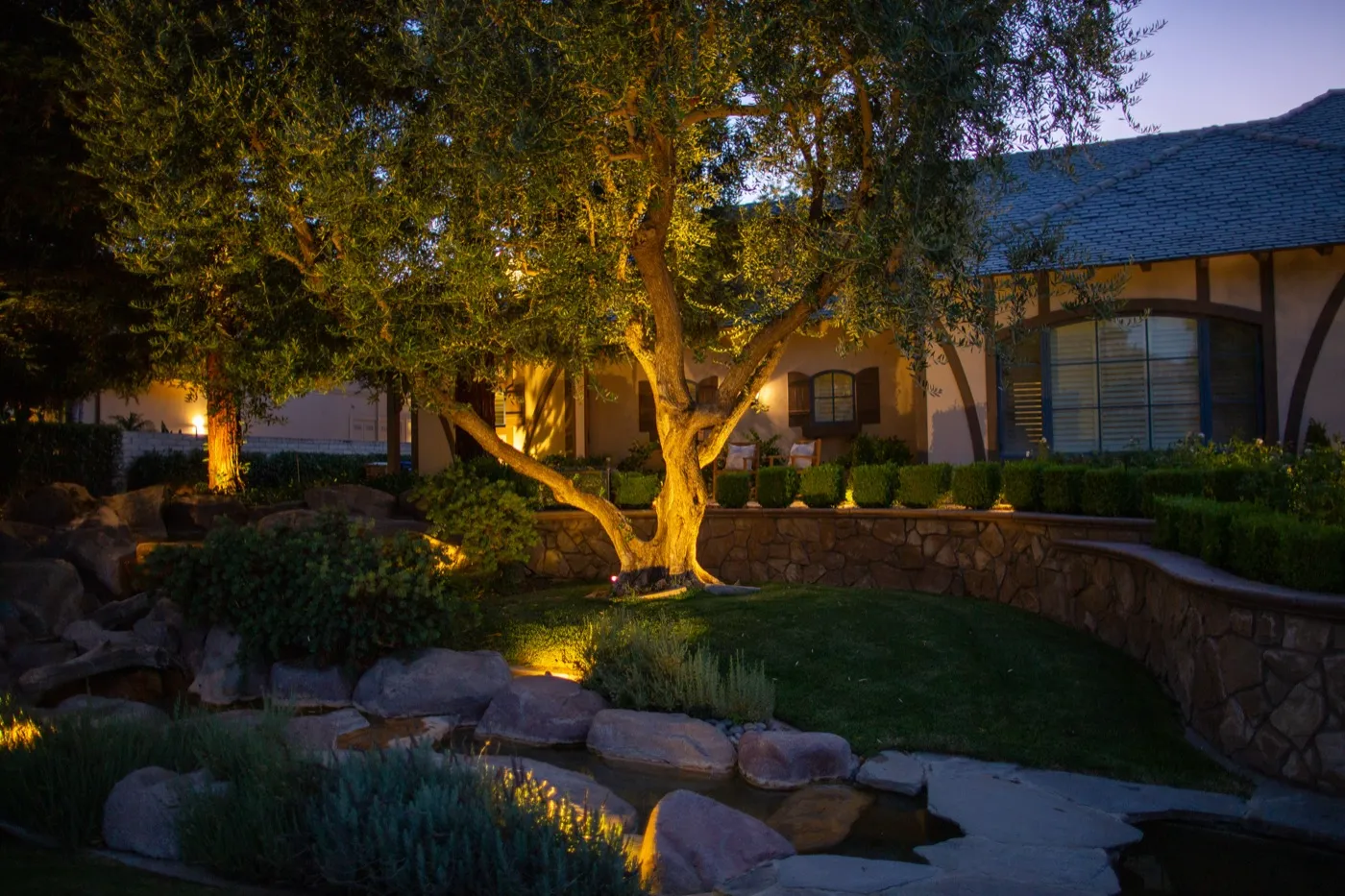
Not every tree should be lit. We choose the ones that carry the view.
Tree & Garden Uplighting
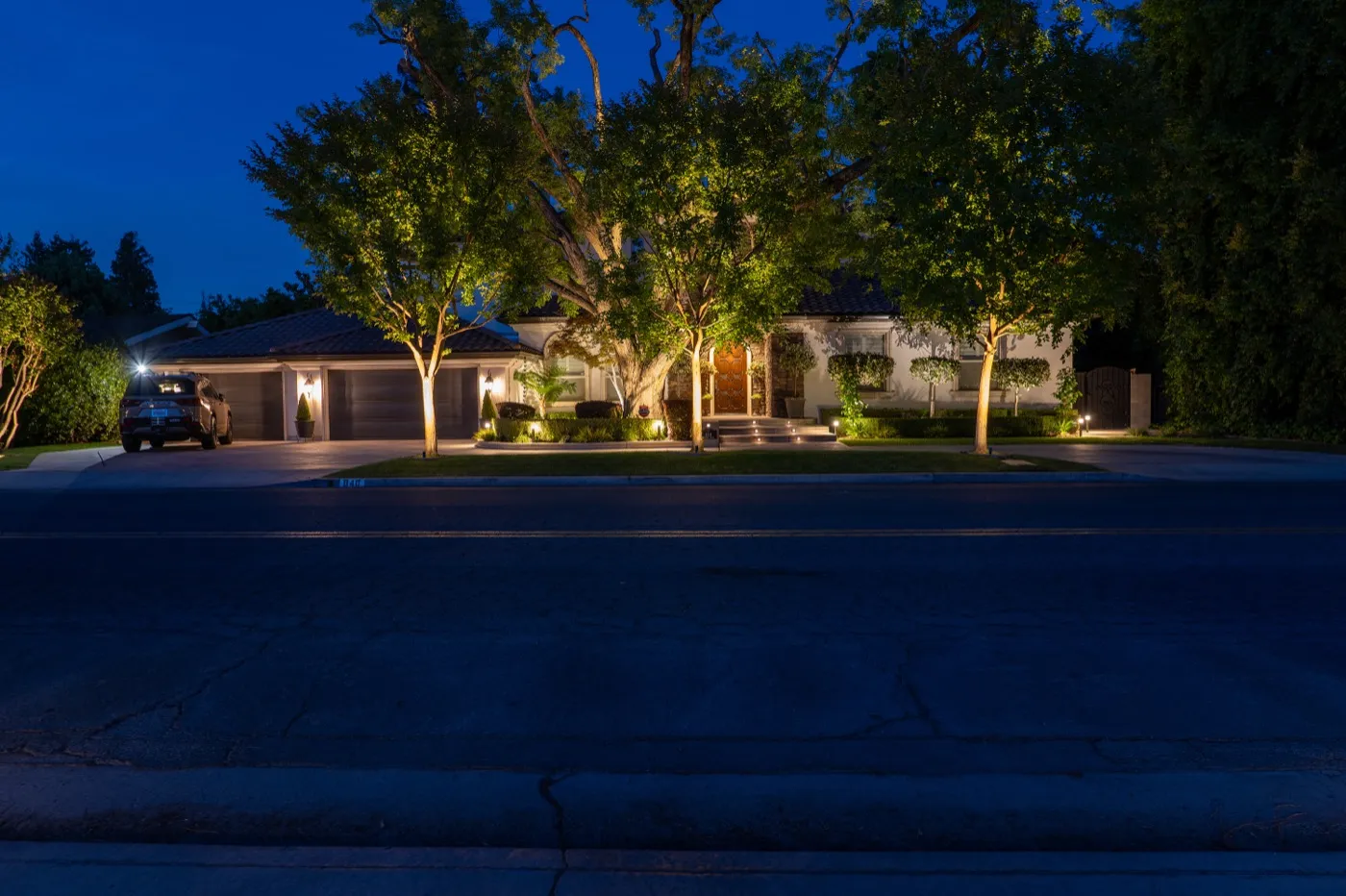
Trees, palms, hedges, beds, and stonework lit from below, so the property has depth above ground level.
The short version
A narrow beam set back from the trunk pushes light up through the canopy and reads as soft and full. The same fixture pushed close to the trunk becomes a hot spot on bark with a dark canopy above it.
Big trees usually want two or three fixtures at different distances rather than one bright one. Small ornamentals want a single wide beam close in.
Plans are built for the trees Bakersfield yards actually have: mature oaks and sycamores, olive and citrus, palms, and young stock that will double in size.
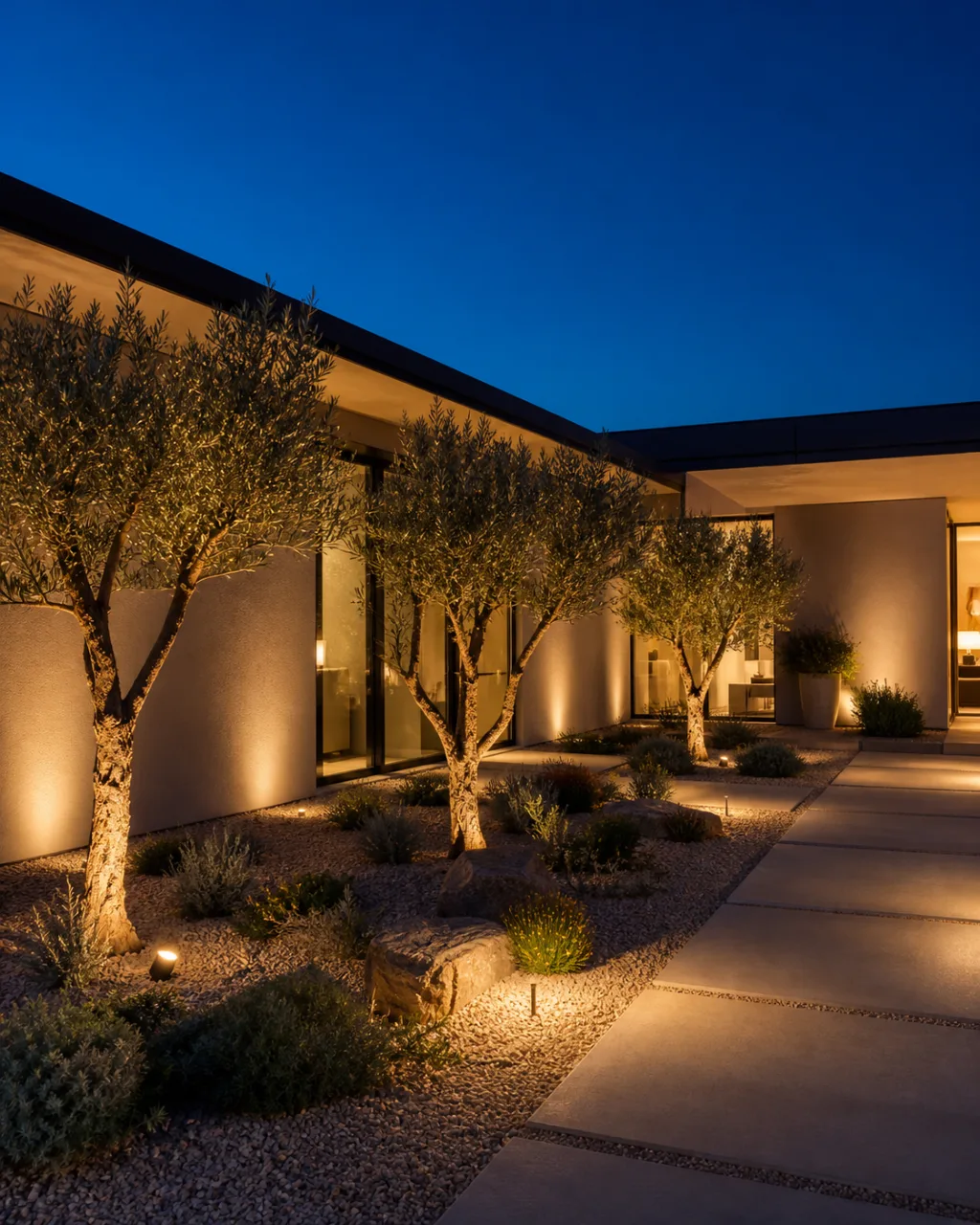
Growth room
We leave slack in the wire, set fixtures outside the root flare, and use adjustable knuckles so the aim can be reset as the canopy fills in. A fixture buried tight against a trunk becomes unserviceable in a few seasons.
What gets lit
Moonlighting & downlighting
Fixtures mounted high in a tree and aimed down cast dappled light through the branches onto a patio or lawn. It is the closest thing to natural light a landscape system can produce, and it lights a seating area without a single fixture in your line of sight.
It takes a tree with the right structure and safe access, so it is not right for every property. Where it works, it is usually the best light on the job.
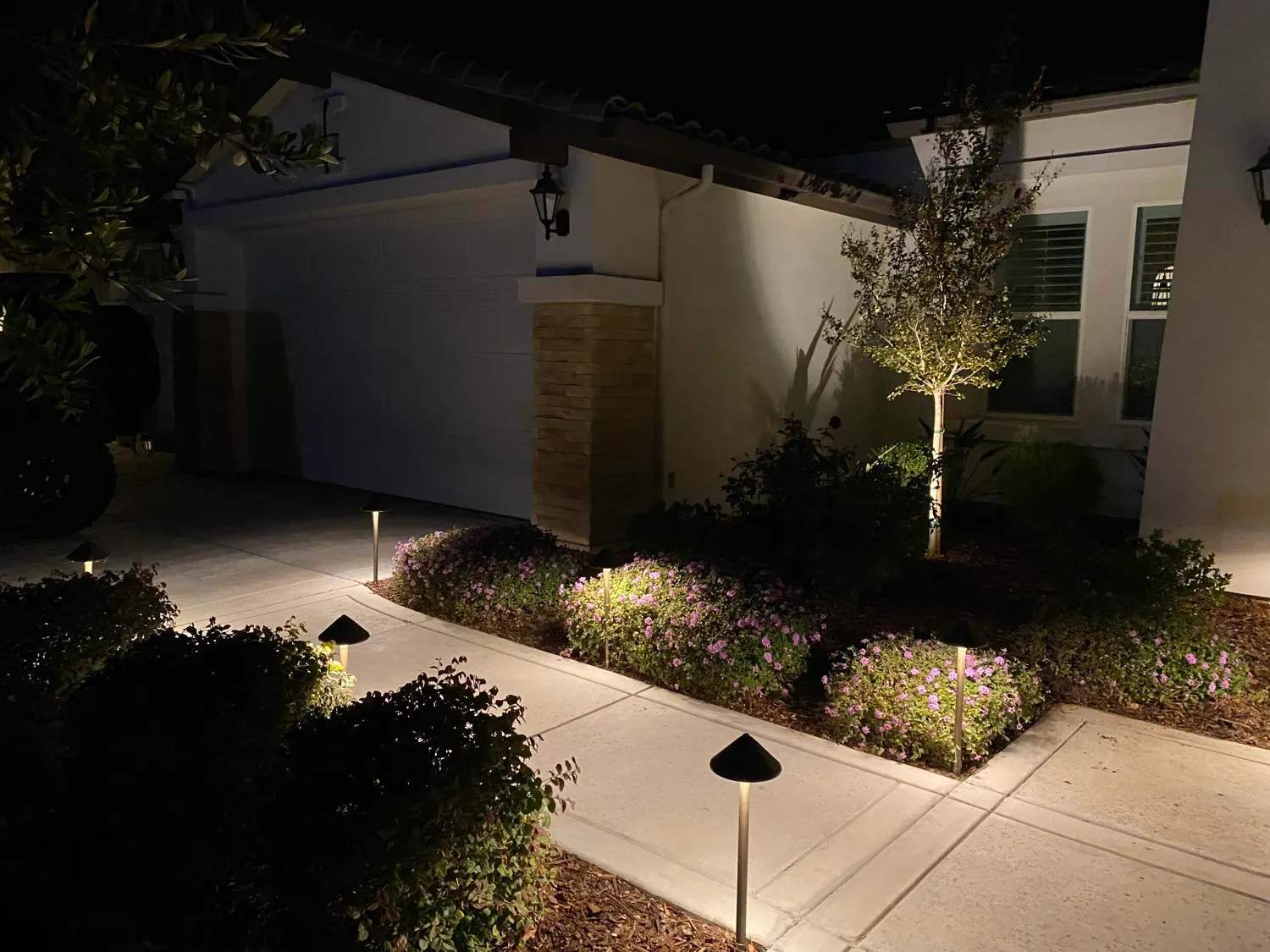
How we aim
Not every tree should be lit. We choose the ones that carry the view.
Fixture optic and setback are matched to canopy height and spread.
Glare guards and planting keep the lamp out of sightlines from the house and street.
We return at night to re-aim and balance brightness between trees.
A yard with three trees lit well looks better than a yard with ten lit evenly.