Dark or Flickering Lights
Failed lamps or LED modules, loose connections, water intrusion, damaged sockets, and fixtures that no longer hold aim.
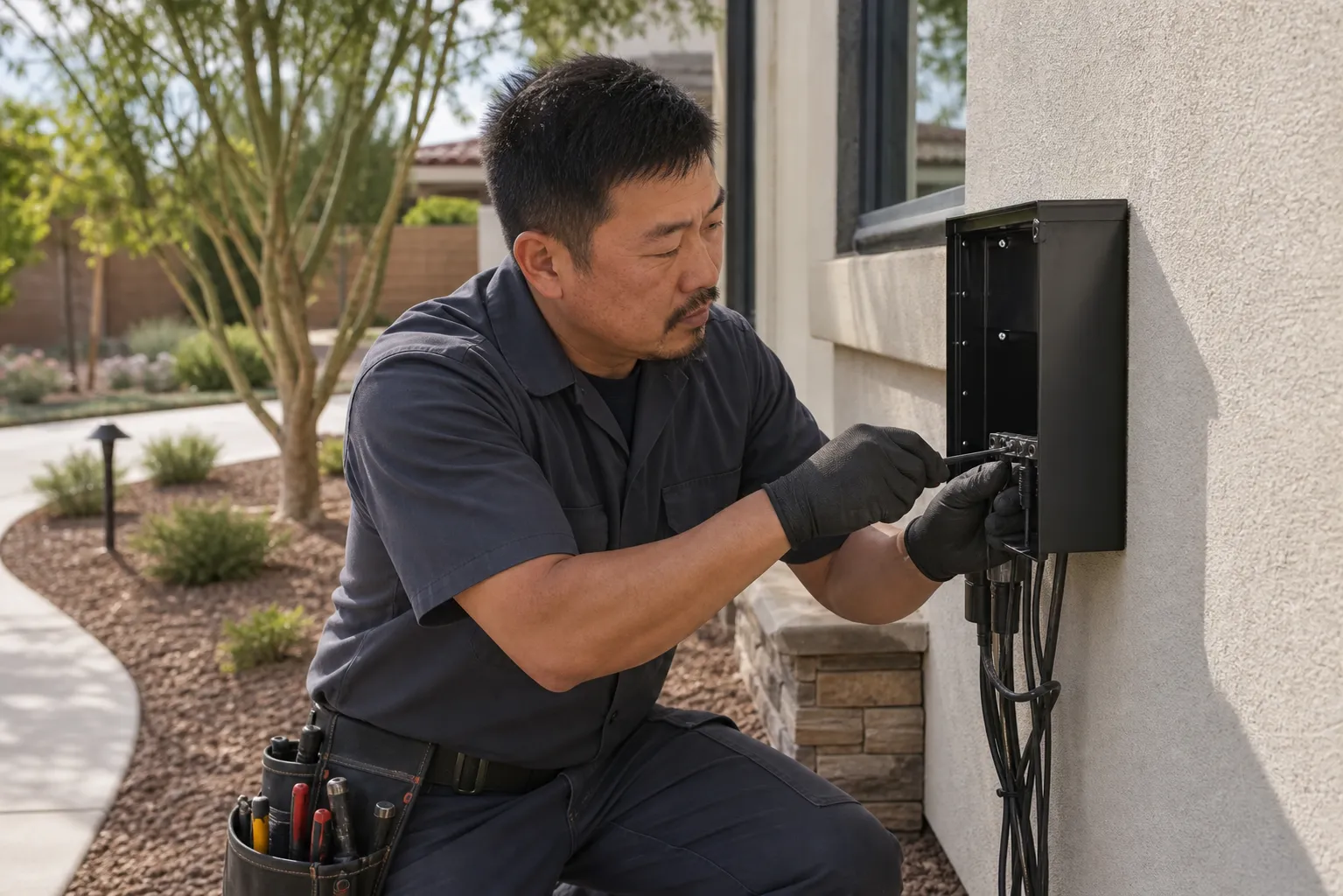
Repair & LED upgrades
Find the actual failure before replacing fixtures that may still be serviceable.
Start with diagnosis
A low-voltage landscape lighting system is a chain: outlet power, transformer, timer or photocell, wire runs, waterproof connections, fixtures, and lamps or LED modules. A failure anywhere in that chain can make one light, one zone, or the entire property go dark.
We test the system in order so the recommendation fits the problem. Sometimes that means one connection or timer. Sometimes an old system needs a new transformer, rewiring, serviceable fixtures, or a staged LED conversion.
Common problems
Describe what the system is doing, not what you think needs replacing. That gives us a better starting point.
Failed lamps or LED modules, loose connections, water intrusion, damaged sockets, and fixtures that no longer hold aim.
Damaged main runs, failed hubs, corroded splices, irrigation or landscape work damage, and voltage loss on long runs.
Overloaded or failed transformers, tripped protection, bad terminals, undersized capacity, and uneven voltage.
Systems that come on at the wrong time, never shut off, drift with the seasons, or stop responding to app controls.
Lower-wattage LED lamps or serviceable fixtures, balanced color temperature, updated controls, and transformer load review.
Fixtures shifted by planting, maintenance, pets, or soil movement, plus glare correction and brightness balancing after dark.
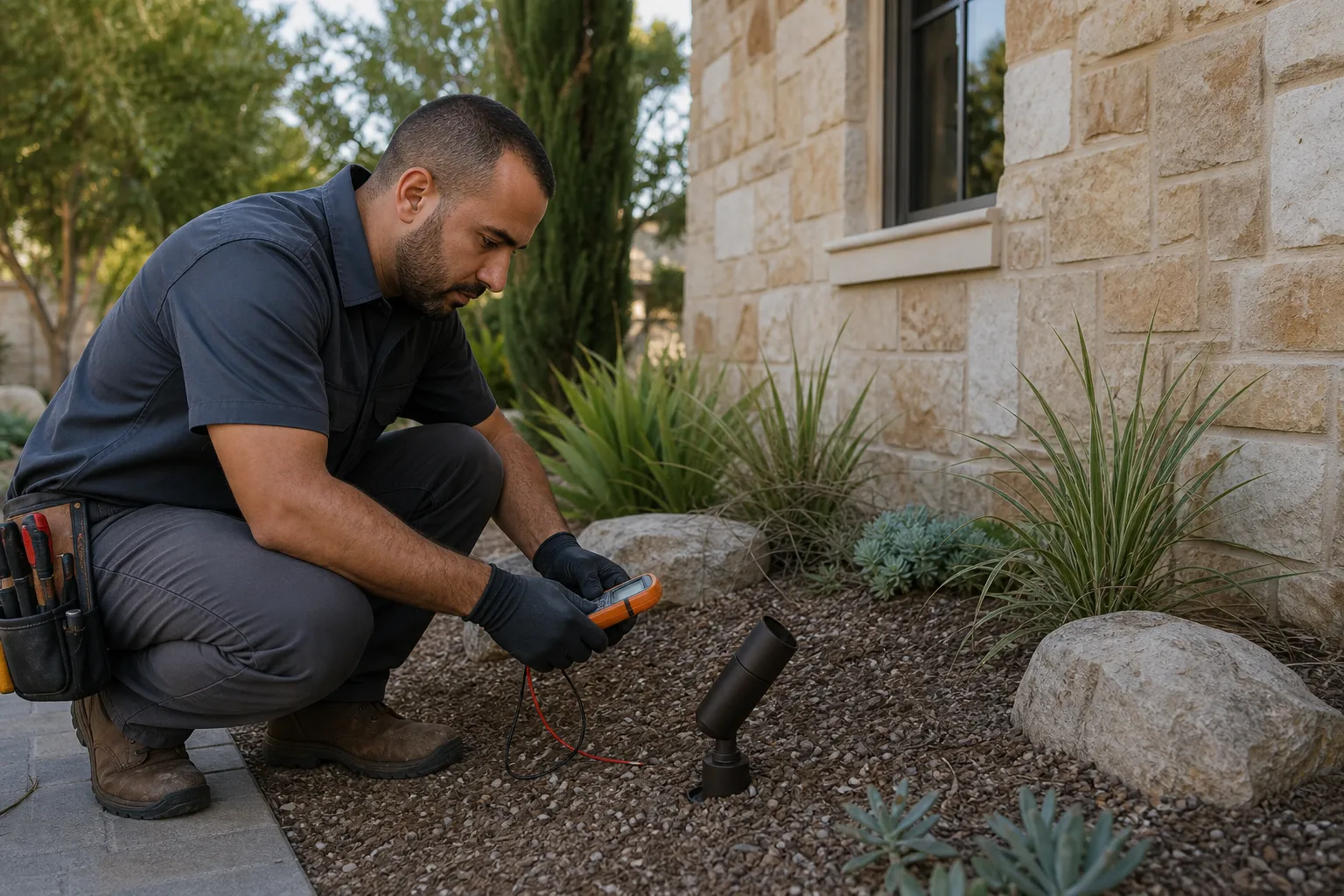
Repair or replace?
A good transformer, sound wire, and serviceable brass fixtures do not need to be discarded because one zone failed. We look for the smallest reliable repair first.
Replacement makes more sense when parts are no longer available, fixtures are taking on water, wiring methods keep failing, or an undersized transformer cannot support the property. When the answer is mixed, the work can be staged by zone.
The repair visit
Which fixtures or zones fail, when the problem started, and whether recent irrigation or landscape work may be involved.
We check outlet power, timer or photocell operation, transformer output, load, and visible terminal condition.
Measurements along the run separate failed fixtures from wiring, splice, load, and voltage-drop problems.
You get a recommendation based on what is serviceable now and what is likely to fail next—not a default full replacement.
20 years in Bakersfield
After two decades of lighting work in Bakersfield, we have seen the failures local conditions create: hard water at connections, irrigation around fixtures, heat at transformers, wire damage in hardpan soil, roots lifting fixtures, and planting growing through beam paths.
That experience helps separate a one-part failure from a system that needs a broader correction.
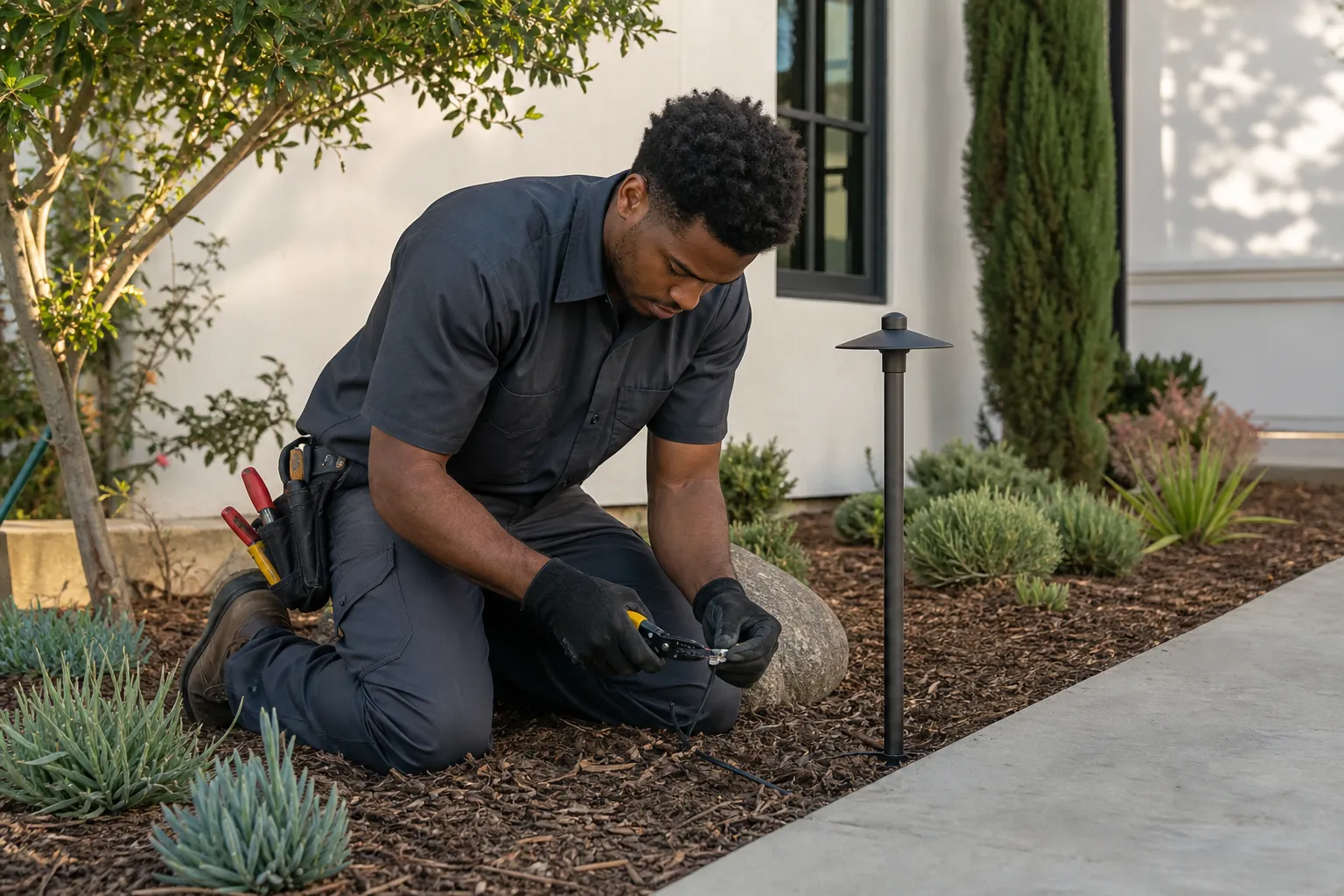
Repair FAQs
These visible answers match the structured FAQ data search engines can read.
Usually. We inspect the transformer, controls, wire runs, voltage, connections, fixtures, and parts availability before recommending a targeted repair or rebuild.
When several fixtures fail together, the cause is often upstream: a tripped outlet, failed timer or photocell, damaged main cable, bad hub connection, overloaded transformer, or low voltage on a long run.
Often. We test the transformer and wiring, confirm fixture condition and lamp compatibility, then recommend LED lamps, new serviceable fixtures, or a staged combination of both.
No. A dark fixture may have a failed lamp or LED module, a loose or corroded connection, low voltage, water intrusion, or a damaged cable. Diagnosis comes before replacement.
Yes, after checking the total load, wire runs, outlet power, controls, and whether the existing transformer is actually the cause of the problem.
Send the property address, describe which areas are dark or unreliable, and include any details you know about the transformer, timer, fixture brand, or age of the system.
Next steps